Real estate photos set the tone for the entire sale. They determine whether a buyer clicks, books a showing, or keeps scrolling. The difference between an average gallery and a compelling one is not a filter or a fancy drone, it is the unglamorous discipline of preparation, timing, technique, and editing carried out to a professional standard. After photographing and directing hundreds of listings with Luminis Media real estate photography teams, I have seen the same pitfalls repeat across price points and markets. Experienced agents sidestep them long before the photographer opens the trunk.
Why the first image matters more than any open house
Buyers scan for five seconds, maybe eight. The lead photo has to communicate space, light, and a clear reason to click. Poorly chosen hero shots, such as a tight photo of a fireplace or a dim front elevation, waste that micro-moment. When we handle listing photography for a busy agent roster, we sort galleries with the thumbnail in mind. The scale of the entry, the presence of sky, and a visible path into the home all perform better in MLS grids and on mobile screens. It feels obvious, yet a surprising number of galleries begin with a garage or a shaded facade. Agents who win the click supervise this choice and do not leave it to chance.
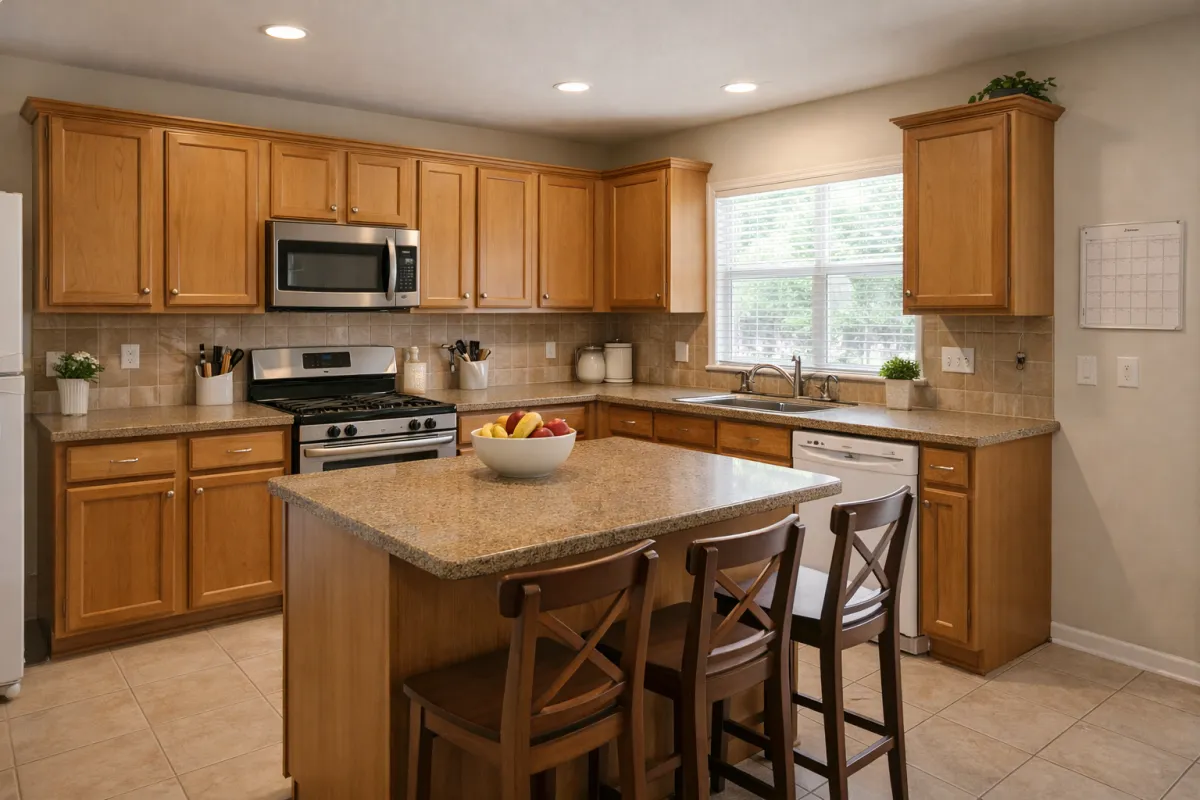
With real estate photography Luminis Media teams approach the hero frame as a marketing decision, not a purely aesthetic one. The goal is to create a frame that anchors the rest of the set, then sequence supporting images to answer the buyer’s next three questions. Where is the kitchen, how big does it feel, and what is the outdoor space like?
Five mistakes seasoned agents refuse to make
- Booking photos at the wrong time of day for the property’s orientation Leaving visual noise in frame that signals maintenance and clutter Using ultra-wide lenses carelessly and creating unnatural distortion Mixing color temperatures and producing rooms with orange and blue casts Over-editing skies, lawns, or window views and undermining trust
These mistakes are fixable. Each has a process that takes minutes to address once you build it into your routine.
Light is the negotiable that decides everything
The best agents treat light like a showing, not a utility bill. They book with the sun. East-facing living rooms sing in the morning. West-facing decks become the hero in the golden hour. If the facade spends most of the day in shade because of mature trees, a rainy midmorning can produce soft, even light that looks surprisingly elegant. The lesson is to match the appointment to the property’s strengths, not to your calendar slot. With Luminis Media property photography, schedulers will ask for orientation and shade notes for precisely this reason.
Inside the home, light quality matters more than quantity. Harsh midday sun through a single window creates blown highlights and black corners unless you have a plan. We combine off-camera flash with ambient frames to maintain window detail without pushing noise. Agents can help by turning off mixed lighting when possible. Kitchen can lights at 2700K fighting with cool daylight from a window make countertops go muddy. Encourage a single color temperature. If that means lights off in a bright room, do it. The final images will have truer whites and calmer tones.
Composition is not a trick, it is discipline
The camera height and alignment should not draw attention to themselves. When vertical lines lean or ceilings feel compressed, buyers sense something is off even if they cannot name it. A measured approach, usually between four and five feet camera height depending on furniture, keeps proportions natural. Big rooms call for strategic corner angles and a parallel shot to anchor the set. Tiny powder rooms demand a single confident angle without forcing a fisheye feel. A responsible real estate photographer from Luminis Media carries rectilinear wide lenses, not the ultra-wide extremes that bend doors and cabinets. This is not about hiding imperfections, it is about respecting the geometry of the space.
I once walked into a 1920s bungalow with original millwork and a low-slung charm. The last listing had used a 10 mm equivalent lens that stretched the hallway into a bowling lane. We re-shot at a modest focal length, kept verticals true, and buyers immediately remarked that the home finally felt like it matched the showing. The seller’s feedback was simple, it looked honest.
Decluttering is not optional, it is triage
Agents who close consistently have a pre-shoot triage routine. They do not attempt full staging in an hour, they target the visual noise that telegraphs maintenance issues or reduces perceived space. A kitchen with five appliances on the counter and a calendar tacked to the fridge reads as tight and busy. The same kitchen with a single plant, a clean counter, and hidden trash reads as intentional. In bathrooms, remove used towels and countertop bottles. In bedrooms, hide charging cords and laundry baskets. These are small moves with outsized impact on how buyers read the home.
We often build this into our service at luminis.media real estate photography sessions. The crew brings collapsible bins for countertop items, microfiber cloths for fingerprinted stainless steel, and a small toolkit to straighten vent covers or tighten a wobbly handle. Ten minutes of attention prevents hours of Photoshop later and produces more credible results.
Weather and sky are strategic choices
A blue-sky day is not always the right answer. Direct sun can flatten a white stucco facade and produce hard, unflattering shadows that look severe. Light overcast tends to be the safest bet, especially for homes with complex rooflines. If the forecast is mixed, we will bring a sky replacement that matches the lighting direction. The trick is to avoid cartoon skies. The clouds must reflect in windows correctly and respect the time of day implied by interior light. With Luminis Media real estate photos, sky swaps are used to normalize a scene, not to fabricate a sunset that never happened.
There is a seasonal angle too. In late winter, lawns in many markets look patchy. Aggressive greening in post can cross the line. We keep a light hand and prefer to schedule spring listings after the first growth cycle, or we focus on structural landscaping and exterior features instead of a wide lawn hero. The point is to work with what the property can deliver honestly.
Color accuracy beats saturation every time
White balance is the silent killer of credibility. A great room that photographs orange tells buyers nothing useful about finishes. We run custom white balance in camera when possible, then refine by sampling known neutrals in post. The risk comes from mixed sources, warm Edison bulbs against cool daylight or a shaded patio with sky bounce. Agents help by choosing bulbs with matching temperatures across key rooms before the shoot. For painted spaces, undertones matter. A gray with a green cast can turn mint under cool light. Testing a patch under daylight and at night, then committing to a single bulb temperature, prevents jarring shifts across the gallery.
There is also the question of camera profiles. For glossy wood cabinetry, a flatter profile keeps highlights under control and preserves grain. For matte walls, slightly more contrast adds dimension. With real estate photography luminis.media crews standardize presets per property to keep the kitchen looking like the same kitchen from every angle.
Sequencing images to tell a buyer where to walk
Most galleries bury the floor plan. Buyers should not need to decode the house. Start with the hero and entry, then the main living area, then the kitchen and dining, then the primary suite, then secondary beds and baths, then outdoor spaces and utility areas. Hallways and closets make weak frames, but they can be useful as context if a layout is unusual. The order is not about showing everything, it is about telling a simple story: how you live here. Agents set expectations for the showing with that sequence. If the bonus room is up a narrow stair, show the stair so there is no surprise at the walk-through.
We pair stills with measured floor plans when the layout is quirky or above 1,800 square feet. Buyers spend more time on listings with a plan and, more importantly, they arrive at the showing pre-oriented. Luminis Media listing photography often bundles schematic floor plans and room dimension callouts for exactly this reason.
Consistency across a portfolio signals professionalism
A single great gallery can sell a house. A consistent portfolio builds a brand and wins listings for years. Agents who treat visual standards as part of their pitch close more often at the kitchen table. They can pull up three recent sales and show the same clarity in light, lines, and sequencing. That is intentional. With luminis.media listing photography, we maintain exposure and color standards across a client’s entire pipeline. The look becomes part of the agent’s identity. Buyers and sellers come to expect it.
The MLS thumbnail is the front door to that brand. Choose frames that pop at one inch on mobile. Wide but legible, bright but not blown out, with a sense of depth that invites a click. Avoid narrow verticals and tight vignettes as lead images, they collapse at small sizes.
Speed is valuable, but not at the expense of context
Turnaround matters. Hot markets move. Experienced agents build in buffer by scheduling photography the day after the cleaning and the same day as minor touch-ups. Rushing a same-day shoot after a contractor is still on site produces dust, footprints, and half-installed fixtures that are expensive to fix in post. A 24 to 48 hour turnaround for edited photos is common in our markets. With Luminis Media real estate photos and video packages, we can often deliver next-day if the prep was done right. Fast and correct beats frantic and fix-it-later.
Rights, licensing, and brand safety
Photos carry rights. Not every photographer grants unrestricted usage, and misunderstandings can create awkward moments when a builder or stager wants to reuse images. Luminis Media real estate photographer agreements are written for agents, with clear perpetual usage for marketing the subject property, and optional licensing for third parties. That clarity keeps your brand safe and prevents last-minute scrambles when a magazine calls for an image or a developer requests permission to share.
Metadata matters too. We embed captions and copyright info, then deliver folders named for the property in a consistent structure. On large teams, small operational details like this reduce mistakes and avoid uploading the wrong home’s gallery to the MLS.
Editing ethics and the line you do not cross
You can clean a lawn, but you cannot add a pool. You can brighten a room, but you should not remove power lines that are visible from the property. Ethical editing is not only a moral position, it protects you from complaints and protects the buyer’s trust. We are careful with window views, showing what a person can reasonably see, not a telephoto version of a skyline that disappears at normal viewing angles. If a street is busy, an exterior at a quieter moment is fair, but replacing it with a totally empty scene that never occurs can mislead.
There is also a fair approach to virtually staging. If the property is vacant, virtual furniture can help buyers read scale. It should be labeled and it should respect realistic dimensions. Overly wide sofas in small rooms or sunlight shadows that do not match the windows raise red flags. Luminis Media property photography services include compliant virtual staging with clear labeling so buyers know what they are seeing.
When to add video, and when to skip it
Video is not a checkbox. It performs when it communicates flow, landscape context, or a lifestyle element that stills cannot. A tight urban condo with limited windows may not gain from a two-minute walkthrough, yet a hillside home with layered decks, a long approach, or dramatic views benefits enormously. Luminis Media real estate videography teams shoot for story, not length. A well-made 60 to 90 second cut that starts with the approach, then key living spaces, then the primary suite, then the backyard, will outperform a five-minute wandering tour.
There are cases to hold video. If a property backs to a freeway and the noise is a negative, stills with a candid caption about dual-pane windows can set honest expectations without centering the drawback. Conversely, if the home has a sunrise deck and the neighborhood wakes up quietly to birds, a morning drone pull can sell the feeling in seconds. This is judgment, and it is part of what a seasoned crew brings.
Luxury listings demand different calibration
Luxury is not only larger spaces. It is materials, sightlines, and light discipline. High-gloss lacquer, stone with reflective crystals, and expanses of glass can create specular highlights and ghost reflections. A luxury real estate photography Luminis Media team will add polarization when needed, flag problematic reflections, and sometimes plan multiple sessions to catch the property in its best light for different zones. We often schedule a daytime architecture set for material clarity, then a twilight for ambiance and exterior glow. Luxury buyers expect both.
Sequencing changes too. Lead with what makes the property rare. If the home has a framed city view from the primary tub, that image might earn the hero even over the living room. Detail frames matter in luxury, but only to support the broader sense of place. One perfect shot of a stone bookmatch says more than ten tight vignettes of hardware.
Entry-level listings deserve honest clarity
At starter price points, the temptation is to overcompensate. That creates disappointment at showings and damages trust. Focus on cleanliness, light, and layout. Show enough to orient, then move on. Bright, true-to-life frames and a clean sequence will outperform heavy-handed editing. Buyers at this tier are sensitive to anything that looks like a trick. With real estate photos luminis.media clients often ask for a minimal retouch set that keeps minor imperfections and only cleans dust, cords, and temporary items. This builds a reputation for honesty that pays off when those same buyers later become sellers.
Working the day of the shoot
Arrive before the photographer if you can. Do a five-minute walk to catch the final details. Open blinds evenly, remove floor mats that chop up space, consolidate items on counters, and walk the exterior to coil hoses and shut garage doors. If a door squeaks or a bulb is out, fix it on the spot. Little things snowball into a feeling, and buyers are reading that feeling.
With Luminis Media real estate photographer crews, the point person will confirm the shooting order and any must-have frames. Speak up if the sellers care deeply about a specific feature. A well-loved garden or a custom built-in deserves coverage even if it is not obvious on first pass. Then step back. Let the crew work. Intervening at every frame slows the process and breaks concentration. Review the back-of-camera occasionally to align on the hero and any complex angles, but keep the momentum.
The compact pre-shoot checklist top agents use
- Bulbs matched to a single temperature in main rooms, burned-out bulbs replaced Counters cleared, personal items and small appliances binned Windows cleaned at least on the interior, blinds set to even height Yard tidied, cars moved, trash bins hidden, hoses coiled Special features noted for coverage, access cleared to mechanical rooms
Five items, fifteen minutes, measurable impact.
Deliverables that help agents sell, not just decorate a listing
The file set should work for every channel you use. That means full-resolution images for print, MLS-optimized sizes for fast upload, and social-first crops that read well in vertical and square formats. Agents who post a single MLS crop to Instagram are leaving engagement on the table. Our luminis.media real estate photos are delivered in labeled folders, with a social set that leans into vertical compositions and punchier contrast to compete on mobile feeds.
Captions add context without hype. If a kitchen has induction, say it. If the HVAC is new, include the year. If the backyard faces west and catches sunset light, note the orientation. Small facts reduce objections and save time at showings. We encourage agents to pair the photo set with a short features list, not as a listicle in the gallery, but as text in the listing and on social posts.
Drone, details, and the limits of the sky
Aerials are valuable when they answer a question. How does the lot sit on the street. How close is the park, the trail, or the water. What is the roof condition. If the property has no yard and the roof is utilitarian, drones may add nothing except a bill. When we do shoot, we pick altitudes that maintain relationship to the property, usually between 30 and 120 feet depending on obstacles and local regulations. Drones are tools, not banners. In many suburbs, two strong oblique angles and a top-down are enough.
For details, less is more. Three to five crafted detail shots can elevate a gallery, but twenty will feel like a furniture catalog. Choose meaningful materials, a hand-crafted staircase detail, a clever built-in, a tile pattern that continues a line of sight.
Proof that the process works
An agent in a mid-size market brought us a tired split-level that had sat with another brokerage. The bones were good. The first run of photos featured harsh midday sun, underexposed interiors, and distorted angles. We rescheduled for late afternoon to catch even light on the facade, coached a quick declutter, matched bulbs, and rebuilt the gallery with clean verticals and a confident hero. We did not add drama that was not there. We simply removed friction. Showings doubled in 48 hours and the home went under contract above ask by the weekend. The seller told the agent, the house finally looked like itself.
That story repeats because the variables are known. Control what you can control and buyers will reward the clarity.
How Luminis Media plugs into your workflow
We designed our service around how agents actually work. Booking lives on a shared calendar that shows sunrise and sunset windows. The crew texts on the way and on arrival. We bring light stands, multiple flashes, polarizers, and spare bulbs. We carry a short prep kit and we know how to use it. Turnaround is communicated before we start. Same day is available when the prep is dialed in. If video is part of the scope, the cinematographer and the still shooter coordinate so rooms are staged once, not twice. You receive a single link with stills, floor plans, and, when ordered, Luminis Media real estate videography assets. Rights are clear, file names are human, and support is available when you need a resize for a broker feature or a magazine inquiry.
Agents who adopt this system do not worry about photos. They focus on pricing, negotiation, and client care. The visuals simply work.
What to avoid, even when tempted
If a feature is controversial, show it plainly. A small yard, a steep driveway, or a close neighbor will reveal itself at the showing. It is better to set the expectation honestly in the gallery than to waste everyone’s time. Do not crop poles, vents, or transformers out of exteriors if they are obviously there. Do not add fireplaces, remove power lines that dominate views, or paint over stains digitally that still exist. That is not marketing, that is misrepresentation.
Lastly, do not let trends override sense. Heavy HDR with halos around windows went out of style because it never looked like real life. Tilted horizons and moody, underexposed frames might win likes but Luminis Media realty photography they do not sell most homes. Aim for timeless and accurate, with a little polish. Everything else is a distraction.
The payoff for doing it right
Agents who avoid the common mistakes and build a reliable visual process close faster, negotiate from strength, and win more listings. Sellers notice. Buyers notice. Your portfolio compounds. Whether you use Luminis Media real estate photography for every listing or a trusted in-house pro with similar discipline, the principles hold. Book with the sun, respect geometry, control color, edit ethically, sequence for clarity, and deliver with intention.
Real estate is full of variables you cannot control. Photos are not one of them. When your images are consistent, clean, and honest, they give buyers a reason to believe. That is the quiet edge the best agents carry from one closing to the next.